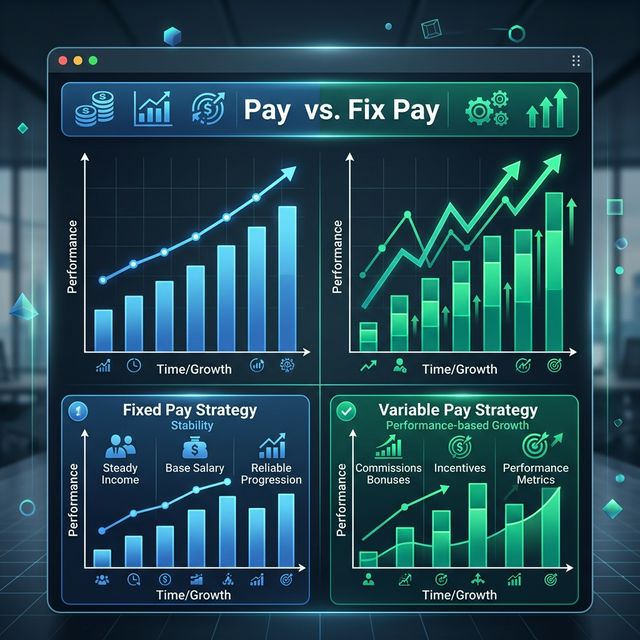
Variable Pay vs. Fixed Pay: Strategic Guide for 2026
The Evolution of Compensation in high-Growth Environments
As we navigate the hyper-competitive recruitment landscape of 2026, the traditional "fixed salary" model is no longer sufficient to attract and retain the elite technical and operational talent that fuels Indian startups. Top-tier candidates are increasingly looking for skin-in-the-game—a compensation structure that directly reflects their personal impact on the company's growth trajectory. This has led to the widespread adoption of modern CTC structures India where a significant portion of the total package is tied to performance metrics.
However, for a founder or HR manager, introducing variable components isn't just about picking a number. It involves complex decisions regarding salary component structuring, tax optimization for the employee, and ensuring that the entire logic is flawlessly captured in your automated MSME payroll system. This guide breaks down the strategic balance between fixed and variable pay to build a high-performance culture in 2026.
Fixed Pay: The Foundation of Financial Security
Fixed pay, often referred to as "Base Salary" or "Fixed CTC," is the guaranteed amount an employee receives regardless of performance. In 2026, maintaining a strong fixed base is essential for employee stability, especially when they are applying for home loans or planning long-term investments. A common mistake mentioned in our analysis of the true cost of payroll errors is underestimating the psychological value of a predictable monthly paycheck.
A well-structured fixed component should include:
- Basic Salary: Usually 40-50% of the total fixed CTC, forming the baseline for EPF and Gratuity calculations.
- Standard Allowances: HRA, LTA, and Special Allowances that provide tax-efficient liquidity.
- Statutory Benefits: Employer contributions to social security.
Variable Pay: Driving High-Impact Performance
Variable pay is the performance-linked incentive (PLI) that is triggered only when specific individual, team, or company-wide KPIs are met. In the 2026 startup ecosystem, variable pay typically ranges from 10% to 40% of the total CTC for leadership roles. The goal is to align the employee's personal success with the company’s valuation and revenue milestones.
1. Types of Performance Incentives
Startups often use a mix of "Annual Variable Pay," "Quarterly Performance Bonuses," and "Project-Specific Incentives." For very early-stage teams, the debate often shifts toward ESOP vs Variable pay. While ESOPs offer long-term wealth creation, cash variable pay provides the immediate "win" that keeps momentum high. If you are struggling to track these distinct payout cycles, it might be time to replace Excel payroll tracking with a system that supports custom incentive logic.
2. Performance Bonus Taxation: The TDS Reality
A common friction point is the sudden high TDS deduction when a large performance bonus is paid. Under the 2026 Indian tax laws, variable pay is treated as part of the total taxable income and is taxed at the employee's applicable slab rate. Strategic payroll managers use an online payroll calculator to help employees estimate their net take-home pay after bonus taxes, preventing "sticker shock" during the festive season.
Strategies for Effective Salary Component Structuring
To maximize the ROI on your payroll spend, consider these three 2026-focused strategies:
- Transparency in Measurement: Nothing kills morale faster than a variable bonus that feels arbitrary. Ensure every performance-linked incentive is backed by clear, data-driven KPIs that the employee can track in real-time.
- Tax-Efficient Packaging: Even within variable pay, look for ways to structure payouts that minimize immediate tax burdens. For example, performance-based travel reimbursements or skill-upgrading allowances can sometimes offer better tax outcomes than pure cash bonuses.
- Frequency of Payouts: For junior-to-mid-level roles, quarterly bonuses often drive better engagement than a single massive annual bonus. Frequent rewards reinforce positive behavior patterns.
Conclusion: Building a Scalable Compensation Engine
A successful 2026 startup doesn't just "pay people"; it architecturally engineers compensation to drive specific business outcomes. By balancing the security of fixed pay with the aggressive upside of performance incentives, you build a team that is both stable and highly motivated. Ensure your Section 115BAC tax regime selectors are updated to handle these fluctuating income months perfectly. Master the art of variable pay today to secure the talent that will build your tomorrow.