ESI Medical Benefits & Staff Enrollment Guide 2026
Social Security: The Safety Net of the Indian Workforce
For millions of workers in India's formal sector, the Employees' State Insurance (ESI) scheme is more than just a monthly deduction on their salary slip—it is a comprehensive, lifelong health insurance policy that provides a vital safety net for them and their families. As an HR manager or a startup founder in 2026, ensuring that your eligible employees are correctly enrolled and understand how to navigate the ESIC medical benefits list is a fundamental part of providing world-class MSME employee benefits.
Managed by the Employees' State Insurance Corporation, this scheme offers a level of medical coverage that is often superior to many entry-level private insurance plans. This guide provides a step-by-step walkthrough for the ESI claim process 2026 and the enrollment requirements to protect your most valuable asset: your people.
Who is Eligible? The ₹21,000 Rule
While we have detailed the legal applicability in our guide on automating Indian payroll compliance, it is worth repeating for the 2026 context: ESI is generally mandatory for employees whose gross monthly wages do not exceed ₹21,000 (raised to ₹25,000 for employees with physical disabilities). If an employee's salary increases beyond this limit mid-year, they remain covered until the end of that specific contribution period. Miscalculating this is one of the most common Excel payroll errors that can lead to rejected medical claims during emergencies.
Step 1: The Pehchan Card Enrollment Process
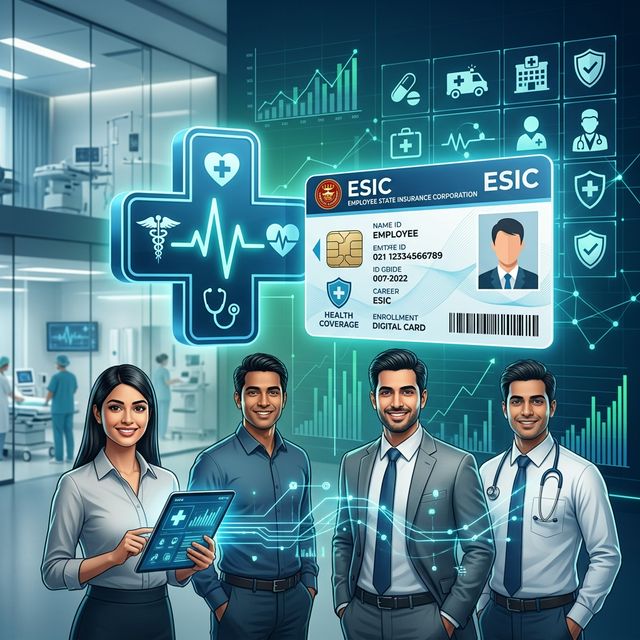
The "Pehchan Card" is the universal ID card that grants an employee and their family access to the vast ESI network hospitals. In 2026, the enrollment process is entirely digital, but it requires precise data entry:
- Employee Data Entry: The employer must register the employee on the ESIC portal using their PAN, Aadhar, and bank details.
- Capturing Bio-metrics: The employee and their family members (dependents) must visit the nearest ESIC branch office to get their photographs and fingerprints recorded for the biometric Pehchan Card.
- Generating the e-Pehchan: While waiting for the physical card, a temporary e-Pehchan can be generated from the portal, which is equally valid for medical treatment. If you are using a modern bulk salary slip maker, your employee portal should ideally provide a link to download this directly.
Step 2: Understanding the Medical Benefit Tiers
The ESI scheme offers multi-tier medical benefits that every employee should be briefed on during their initial startup onboarding process:
- Primary Care: Outpatient treatment (OPD) and medicines are available at thousands of ESI dispensaries across India.
- Secondary Care: Specialist consultations and hospitalization at ESI Hospitals.
- Tertiary Care: Advanced surgeries and specialized treatments (like heart surgery or dialysis) at "Tie-up" private hospitals. The ESI corporation bears the entire cost of these treatments without any upper individual limit.
Step 3: Navigating the ESI Claim Process 2026
When an emergency strikes, time is of the essence. The ESI claim process usually follows two paths:
- Cashless Treatment: By presenting the Pehchan Card at an ESI diagnostic center or hospital, the employee receives treatment without any out-of-pocket expenditure.
- Reimbursement: If a Pehchan-holding employee is rushed to a non-ESI hospital in a life-threatening emergency, the employer can help them file a reimbursement claim with the local ESIC office, provided they have the necessary medical certificates and original bills.
Conclusion: The Employer's Moral Responsibility
Beyond the legal mandate, ensuring your lower-income workforce is protected by ESI is a moral imperative. A single medical emergency without insurance can wipe out an entire family's savings. By maintaining airtight employee ESI registration and providing clear guidance on how to use the card, you build a workplace of deep mutual respect. Stop manually wrestling with ESIC challans on old portals—switch to a modern payroll system that automates the entire social security lifecycle, from deduction to deposition to card generation. Secure your team's health today for a more productive tomorrow.